November 11, 2026
How to Read a Diamond Grading Report Before You Buy
By @foreversparkle
Why the grading report matters
Buying a diamond engagement ring is a significant purchase. Most shoppers rely on a diamond grading report to understand what they are paying for. This document, issued by an independent laboratory, describes the stone’s key qualities. Learning to read one helps you compare diamonds with confidence and avoid overpaying for features that do not matter to you.
A grading report is not a guarantee of beauty or value. It is a snapshot of measurable characteristics. The four Cs, cut, color, clarity and carat weight, form the core, but several other details deserve attention too. Below is a step-by-step walkthrough of what to check and what to watch at each stage.
Start with the basics: carat weight and measurements
The top of any report shows the diamond’s carat weight, usually to the hundredth of a carat. Carat weight affects price significantly, but it does not tell you how large the stone looks. A well-cut one-carat diamond can appear larger than a poorly cut one of the same weight. Look for the dimensions, length, width and depth, listed in millimeters. These numbers give you a sense of the stone’s actual size on the finger.
Watch out for diamonds that are cut too deep or too shallow. A deep cut hides weight in the bottom, making the diamond look smaller from the top. A very shallow cut can cause light to leak out, reducing sparkle. The measurements help you spot these proportions before you see the ring in person.
Cut grade: the most important factor for brilliance
Many grading reports assign a cut grade for round brilliant diamonds. Fancy shapes such as oval, pear or cushion may not receive a cut grade from every laboratory. When a cut grade is present, it ranges from Excellent to Poor. This grade evaluates how well the diamond’s facets interact with light. A diamond with an Excellent or Very Good cut will appear bright and lively, even if its color or clarity is lower.
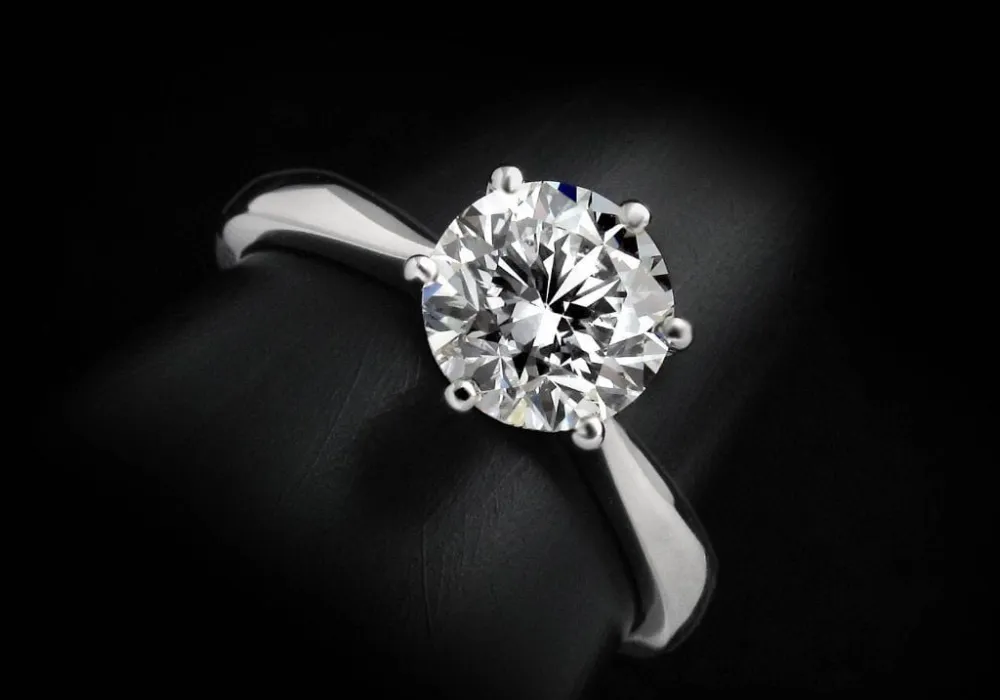
If the stone you are considering lacks a cut grade, study the proportions listed on the report. Table size, crown angle and pavilion depth all influence light performance. A reliable laboratory provides these numbers, and you can compare them against recommended ranges for your chosen shape.
Color grade: what the letter means for your ring
Color grading for white diamonds runs from D (colorless) to Z (light yellow or brown). For an engagement ring, the most common choices fall between D and J. Colorless stones (D, F) are rare and expensive. Near-colorless stones (G, J) offer excellent value because the slight warmth is hard to see once the diamond is set in a ring.
Consider the metal of the setting. A yellow gold band can make a lower color grade look whiter, while platinum or white gold may emphasize any warmth. The report gives you the exact grade, so you can decide whether the difference matters to your eye and your budget.
Clarity grade: finding inclusions you can live with
Clarity grades range from Flawless to Included. Most natural diamonds contain tiny internal marks called inclusions or surface irregularities called blemishes. The grade is based on the size, number, position and visibility of these features under magnification.
For an engagement ring, clarity grades of VS2 (Very Slightly Included) or SI1 (Slightly Included) often provide a clean look to the naked eye at a reasonable price. The report includes a small diagram that plots the inclusions. Check their location. A black crystal near the center of the table may be visible, whereas a white feather near the edge is usually hidden by the setting or the prongs.
Do not fixate on a perfect grade. A diamond that looks clean to your unaided eye and has a minor inclusion hidden by the mounting can save you a significant amount.
Fluorescence and other notes
Fluorescence is the diamond’s reaction to ultraviolet light. Strong or very strong fluorescence can make a diamond appear milky or hazy in sunlight, though many diamonds with fluorescence look perfectly normal. The report will list fluorescence as None, Faint, Medium, Strong or Very Strong. If the color grade is already low (say, J or K), strong blue fluorescence can sometimes make the stone appear whiter. For higher color grades, strong fluorescence may reduce transparency. It is worth seeing the diamond in natural light before you decide.
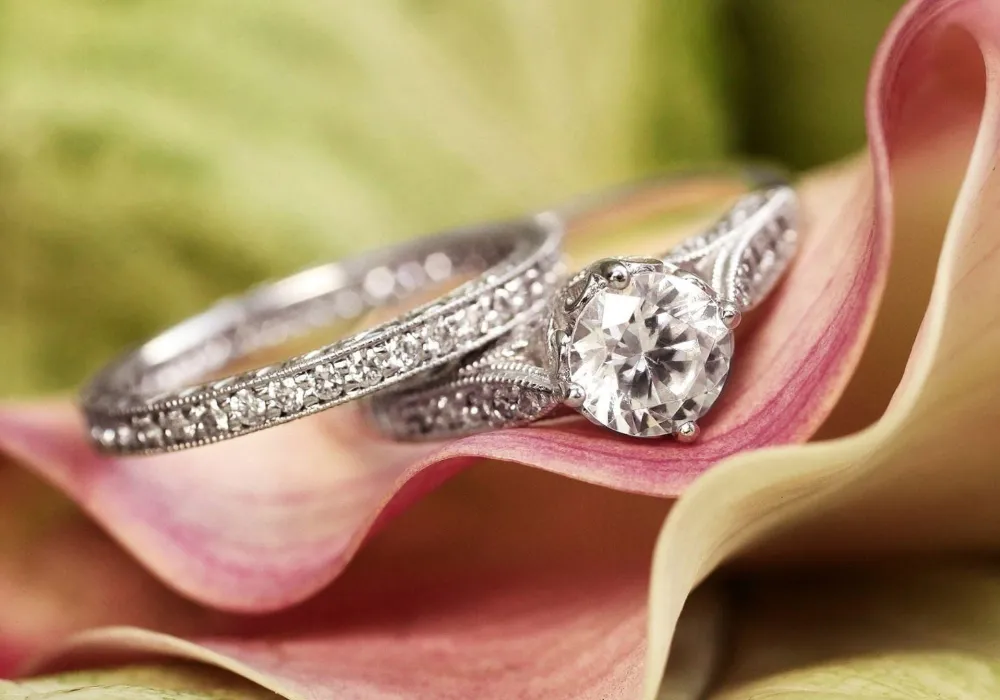
The report also mentions polish and symmetry grades. Polish refers to the smoothness of the facets, while symmetry describes how well the facets align. Both are typically graded Excellent, Very Good, Good, Fair or Poor. A very poor polish or symmetry can affect the diamond’s brilliance, but minor variations are rarely visible to the casual observer.
Check the laboratory that issued the report
Not all grading reports are equal. The reliability of the document depends on the reputation and consistency of the grading laboratory. The most widely respected labs in the industry are the Gemological Institute of America (GIA) and the American Gem Society (AGS). Their reports are known for strict, consistent standards. A diamond with a GIA or AGS report carries more confidence than one graded by a less rigorous lab.
Be cautious of reports from small or unknown labs. Some inflate grades to make the stone appear more valuable. If the report seems too good to be true for the price, it may be worth paying for an independent appraisal. A trusted jeweler can help you verify the grade if you have doubts.
This is where a diamond grading report becomes your best tool. It gives you objective data to compare stones from different sellers. You can look at two diamonds with the same carat weight and see how their cut, color and clarity differ. You can decide which trade-offs make sense for your budget and your partner’s style.
Putting it all together before you buy
When you finally choose a ring, ask the jeweler for the report that matches the diamond in the setting. Some stores swap stones or show you a report for a similar diamond. Confirm that the report number matches the inscription on the diamond’s girdle. Most reputable labs laser-inscribe a tiny number on the stone that corresponds to the report.
Examine the diamond under a simple jeweler’s loupe or ask the staff to show you the inclusions plotted on the diagram. This helps you trust what the report says. If the diamond is already set, the report may still include a plot of the inclusions, but some details may be hidden by the prongs.
Keep in mind that a grading report describes a loose diamond. Once the stone is set, the setting can affect its appearance. A bezel setting may hide inclusions near the edge. A halo of small diamonds can make the center stone appear larger. These are design choices, not flaws in the report. Use the report to understand the center stone’s quality, then judge the overall ring by how it looks on your hand.
A diamond grading report is not a substitute for seeing the diamond in person, but it is a reliable guide. It protects you from sellers who might exaggerate a stone’s quality. It also helps you focus on what matters: a beautiful diamond that fits your budget and makes the person wearing it happy.
Before you hand over your credit card, take ten minutes to read every section of the report. Compare it with other stones in the same price range. If something feels off, ask questions. A knowledgeable jeweler will welcome your curiosity. The more comfortable you are with the data, the more confident you will feel about your purchase.
❧